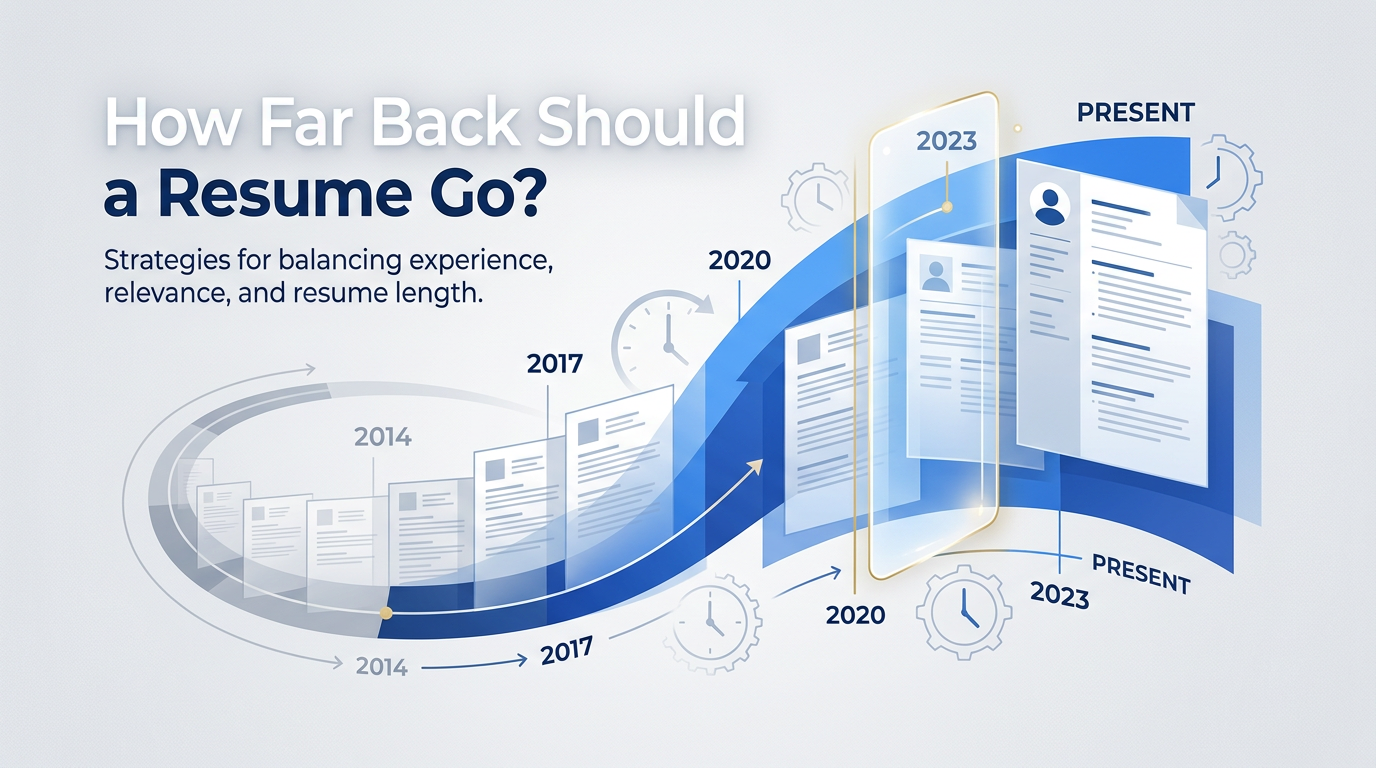
How Far Back Should a Resume Go? Expert Guidelines for 2026
One of the most common resume dilemmas is determining how much work history to include. Go too far back, and you risk overwhelming recruiters with outdated information. Cut too much, and you might miss valuable experience that showcases your qualifications.
The answer isn't one-size-fits-all. How far back your resume should go depends on your career level, industry, and what you're trying to demonstrate. This guide provides clear guidelines to help you make the right decision for your situation.
The General Rule: 10-15 Years
For most professionals, including 10 to 15 years of relevant work history is the sweet spot. This timeframe typically provides:
- Enough experience to demonstrate career progression and expertise
- Recent, relevant skills that match current market demands
- A concise document that respects recruiters' time
- Avoidance of age discrimination triggers (in many countries)
Why This Range Works
Technology, business practices, and industry standards evolve rapidly. Experience from 15+ years ago may not reflect current methodologies or demonstrate modern skills. Recruiters are most interested in what you've accomplished recently and how relevant your experience is to today's challenges.
Not sure if your resume length is right? GetQuickResume analyzes your experience and recommends the optimal timeline for your career level.
Guidelines by Career Level
Your career stage is the primary factor in determining how far back to go. Here's how to adjust the general rule based on where you are in your professional journey:
Entry-Level (0-3 Years Experience)
Include everything relevant. Even internships, part-time jobs, and significant academic projects should appear if they demonstrate skills applicable to your target role.
- Internships and co-op positions
- Part-time jobs that developed transferable skills
- Major academic projects or research
- Volunteer work with relevant responsibilities
Mid-Level (3-10 Years Experience)
Focus on the most recent 10 years. At this stage, you should have enough relevant professional experience to fill your resume without needing older entries. Early internships and part-time jobs can be removed unless they're directly relevant to your target role.
- Professional roles that demonstrate growth
- Positions with quantifiable achievements
- Remove early internships unless highly prestigious
- Part-time jobs unrelated to your career
Senior-Level (10+ Years Experience)
Strategic selection of 10-15 years. Senior professionals can be more selective. Include positions that demonstrate leadership, strategic impact, and progression toward senior roles. Older positions can be summarized in an "Earlier Career" section if they add value.
- Leadership and management roles
- Strategic initiatives with business impact
- Earlier career summary if space allows
Career Changers
Prioritize relevance over recency. If you're transitioning to a new field, include any past experience that demonstrates transferable skills, even if it means going back further. The key is showing applicable abilities, not just chronology.
- Any role with transferable skills
- Projects or responsibilities related to target field
- Consider functional format to highlight skills over timeline
Learn more about handling career transitions in our guide on resume tips for career changers.
Exceptions to the Rule
While the 10-15 year guideline works for most situations, certain circumstances warrant including older experience:
When to Go Back Further
Highly Relevant Experience
If you worked at a prestigious company or held a notable position 20 years ago that's directly relevant to your target role, consider including it — especially if it demonstrates expertise you haven't used recently.
Industry-Specific Requirements
Some industries value deep historical experience. Academia, certain government positions, and specialized technical fields may expect comprehensive career documentation. Research your specific industry's expectations.
Demonstrating Career Progression
If removing older jobs creates gaps in your career story or hides the progression that led to your current expertise, strategically including key earlier positions may strengthen your narrative.
Returning to Previous Field
If you're returning to a field you worked in earlier in your career, those older positions become highly relevant again and should be highlighted.
When to Cut Shorter
- Outdated skills: Positions using obsolete technology or methodologies
- Junior roles at your level: Entry-level positions now that you're senior
- Unrelated jobs: Early career work in completely different industries
- Space constraints: If keeping it to one page is critical for your industry
Need help deciding what to include? GetQuickResume analyzes your experience and suggests the optimal timeline based on your career goals and target role.
How to Handle Older Experience
When you have valuable older experience but don't want to date yourself or overwhelm your resume, use these strategies:
Option 1: Earlier Career Summary Section
Create a separate section titled "Earlier Career" or "Additional Experience" that lists older positions without dates:
Earlier Career:
Additional experience includes roles at Microsoft, IBM, and Deloitte in software development and systems architecture positions.
Option 2: Selected Highlights Approach
Include only the most impressive older position and summarize the rest:
Previous Experience (1998-2008):
Senior roles at Fortune 500 companies including General Electric and Procter & Gamble in operations management and supply chain optimization.
Option 3: Omit Dates for Older Roles
List the position and company but exclude dates for roles older than 15 years:
Senior Consultant — McKinsey & Company
New York, NY
Note: Some employers require complete work history in application forms. The resume strategies above are for the document itself, not for hiding information when explicitly requested.
The Relevance Filter
Beyond the timeline question, apply a relevance filter to every position you consider including:
Ask These Questions for Each Position
If a position doesn't pass this filter, consider removing it regardless of how recent it is. Every line on your resume should earn its place by contributing to your candidacy.
Key Takeaways
Resume Timeline Guidelines
- General rule: Include 10-15 years of relevant work history
- Entry-level: Include all relevant experience including internships
- Mid-level: Focus on the most recent 10 years
- Senior-level: Be selective, prioritize leadership and impact
- Career changers: Prioritize relevance over recency
- Use "Earlier Career" section for valuable but dated experience
- Apply the relevance filter to every position you consider
- Remove outdated skills and unrelated early jobs
Determining how far back your resume should go is about balancing comprehensiveness with relevance. The goal is to present the most compelling evidence of your qualifications for the specific role you're targeting.
Remember: recruiters spend an average of 7 seconds on initial resume scans. Make every year of experience you include count toward making your case. When in doubt, prioritize relevance and recency, and consider using an "Earlier Career" section for important but dated experience.
Ready to build a resume with the perfect timeline? GetQuickResume helps you determine exactly how much experience to include based on your career level and target position, ensuring your resume makes the strongest possible impression. Start optimizing your resume today.
Ready to Create Your Professional Resume?
Skip the guesswork. GetQuickResume's AI helps you create a professional, ATS-optimized resume in minutes.
Start Free - No Credit CardGetQuickResume Team
Career & Resume Experts
Our team of HR professionals and career coaches share insights to help you land your dream job. We combine industry expertise with AI technology to make resume building effortless.
Related Articles
How to Create a Resume That Gets You Hired: The Complete Guide
Learn the essential elements of a winning resume, from formatting best practices to action verbs that impress recruiters. Your step-by-step guide to landing more interviews.
What is ATS? How Applicant Tracking Systems Work (And How to Beat Them)
Discover how 75% of resumes never reach human eyes and learn proven strategies to optimize your resume for Applicant Tracking Systems used by top employers.